

Last updated: November 2026. Medical decisions are made case by case. This guide is general information, not medical advice.
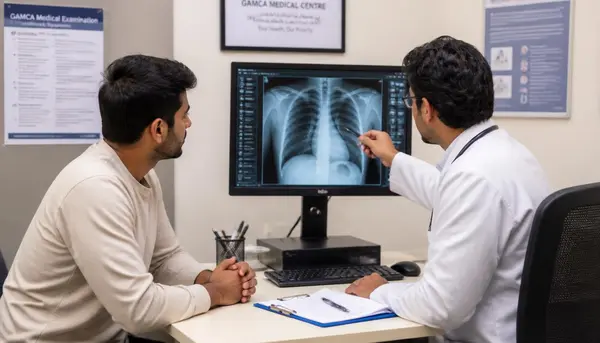
An old scar in chest X-ray is one of the most common worries for applicants taking the GAMCA (Wafid) medical, especially if they have had TB, pneumonia or a chest infection in the past. Having an old scar does not automatically mean you will be declared UNFIT, but it is also not something to ignore. This guide explains what an old scar is, what doctors look at in the chest X-ray, and how to prepare. Outcomes vary from case to case.
Disclosure: This website is an independent information and assistance service and is not the official Wafid website.
Key Takeaways
- An old scar in chest X-ray does not automatically lead to an UNFIT result, but it can in some cases. There is no single rule for every scar.
- The outcome depends on the type, size and location of the finding, whether it looks stable, and the judgement of the examining doctors.
- A chest X-ray cannot always tell an old, healed scar from active disease, so doctors may ask for further checks.
- Changes after past TB, such as scarring, calcified spots or pleural thickening, are a common reason for questions.
- A scar cannot be removed with medicine. Carry your records and be honest about your history.
- If you receive an UNFIT result and want to know your options, read our guide on the GAMCA medical recheck.
What Is an Old Scar on a Chest X-Ray?
An old scar is an area of scarring (fibrosis) left in the lungs or the lining around them after an infection, injury or illness has healed. It can remain visible on an X-ray for years, even when you have fully recovered and have no symptoms. Common causes include past TB, pneumonia, other lung infections and chest injury or surgery.
Why the Chest X-Ray Matters in the GAMCA Medical
The chest X-ray is a key part of the GAMCA medical. It is used mainly to screen for active TB and other lung conditions that the destination country may consider a public health concern. Doctors look at the lungs, airways and surrounding tissue, and report anything unusual.
Can an Old Scar Lead to an Unfit Result?
Not automatically, but it can. The outcome depends on the type of finding, how large it is, where it is, whether it looks stable, and the judgement of the examining doctors under the Gulf Health Council’s criteria.
A chest X-ray cannot always tell an old, healed scar from active disease. This is why doctors may ask for more checks when something looks unclear. Some applicants with mild, stable findings are cleared, while others, especially with changes linked to past TB, report being declared UNFIT even after full recovery.
Doctors usually look at:
- Whether the finding looks old and stable or could suggest active disease
- The size and location of the scar
- Your medical history and past treatment, if you provide it
- Any additional tests the doctors ask for
Common Causes of Lung Scarring
Previous tuberculosis. Many applicants have been treated for TB and are fully recovered, but some scarring can remain for years. Changes after TB can include scarring, calcified spots and pleural thickening. These are usually stable and do not spread, but they can still be noticed on an X-ray taken years later.
Pneumonia. Severe pneumonia can sometimes leave small scars in the lungs.
Other lung infections. Some bacterial or viral infections leave minor fibrotic changes.
Chest injury or surgery. Past trauma or an operation in the chest area can leave marks that show on an X-ray.
What Happens If Doctors Notice a Scar?
If something on the X-ray looks unclear, the doctors may review your history, compare it with earlier reports or ask for further tests. The decision is based on the overall assessment, not on the scar alone, and the final result follows the Wafid and Gulf Health Council process.
How to Prepare for Your Medical
Keep your records ready. If the scar is from a past illness, carry treatment records, discharge summaries and earlier X-rays.
Be honest about your history. Give accurate information about past TB, pneumonia or other lung conditions and treatment.
Follow medical advice. If you were told to complete any treatment or follow-up for a lung condition, finish it.
Keep realistic expectations. An old scar cannot be removed with medicine, so there is nothing to “fix” before the exam. Do not pay anyone who promises to clear or remove a scar from your report.
Follow staff instructions. Take the X-ray as instructed and answer questions clearly.
Understanding FIT and UNFIT Decisions
The GAMCA medical aims to identify current conditions that could be a public health concern. Doctors consider the X-ray together with your history and any further findings. Every case is assessed individually, and the final report follows the physicians’ assessment and GCC medical guidelines.
If you receive an UNFIT result and believe it needs review, read our guide on whether you can request a GAMCA medical recheck.
FAQs
Does an old scar in a chest X-ray always cause an UNFIT result?
No. Many findings are assessed as old and stable. But some applicants are declared UNFIT because of scarring, particularly changes linked to past TB. It depends on the individual case.
Can an old TB scar be removed with medicine?
No. Medicine cannot remove an old, healed scar. Be careful of anyone who claims otherwise.
What is pleural thickening on a chest X-ray?
It is thickening of the lining around the lungs. After TB it is usually stable and non-progressive, but it can still be noticed during a medical screening.
Should I carry my old X-rays and treatment records?
Yes. Past records can help the doctors understand your history if they have questions about a scar.
Can a chest X-ray show whether TB is active or old?
Not always. X-ray changes can suggest TB but are not diagnostic on their own, so doctors may request further evaluation when needed.
What if I am declared UNFIT because of a scar?
Ask the medical centre what the result relates to, consult a doctor, and check the official process. See our guide on the GAMCA medical recheck for what you can do next.
Conclusion
An old scar on your chest X-ray is a common finding and does not automatically lead to an UNFIT result, but outcomes differ from case to case. Doctors want to be sure the finding is not active disease. Carry your medical records, be honest about your history and follow official guidance.
Need help understanding the process? You can contact us. Official services and policies are on wafid.com.
📞 +91 9088442186 | 📧 support@gamcamedicals.org.in
